
How Much Does It Cost to Charge an E-bike in the UK?
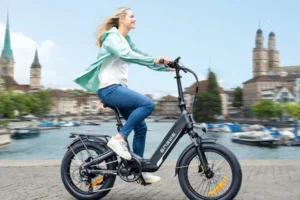
Charging an e-bike in the UK usually costs only a few pence. Depending on the battery size and your electricity tariff, a full charge typically costs between 10p and 30p.
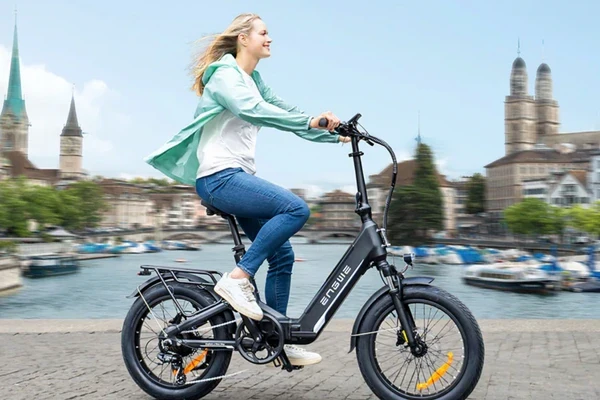
Charging an e-bike in the UK usually costs only a few pence. Depending on the battery size and your electricity tariff, a full charge typically costs between 10p and 30p.
Compared with filling up a car or paying for public transport, an e-bike is one of the most affordable ways to travel. In this guide, we explain how to calculate the cost of charging an e-bike, how much you can expect to spend each month and which factors affect the final price.
The cost depends mainly on two things:
The capacity of the battery.
Your electricity price per kilowatt-hour, or kWh.
As of July to September 2026, the average electricity unit rate under Ofgem’s price cap is 26.11p per kWh for customers paying by Direct Debit in England, Scotland and Wales. ofgem.gov
A typical e-bike battery has a capacity between 300Wh and 750Wh. Converted into kilowatt-hours, that equals between 0.3 kWh and 0.75 kWh.
| Battery capacity | Approximate cost per full charge |
|---|---|
| 300Wh | About 8p |
| 400Wh | About 10p |
| 500Wh | About 13p |
| 600Wh | About 16p |
| 750Wh | About 20p |
| 1,000Wh | About 26p |
These figures are estimates based on a rate of 26.11p per kWh. The actual cost may be slightly higher because charging is not 100% efficient. In real-world use, allowing approximately 10% to 15% for charging losses gives a more realistic figure.
For example, a 500Wh battery contains 0.5 kWh of energy:
0.5×£0.2611=£0.130550.5 \times £0.2611 = £0.130550.5×£0.2611=£0.13055
That means the theoretical cost is approximately 13p. Including charging losses, the real cost is likely to be around 14p or 15p.
You can calculate the cost of charging your e-bike using this simple formula:
Battery capacity in Wh ÷ 1,000 × electricity price per kWh = charging cost
For a 500Wh battery and an electricity rate of 26.11p per kWh:
500 ÷ 1,000 × £0.2611 = £0.13
The result is approximately 13p for a full charge before charging losses.
To estimate the real cost more accurately, add around 10% to 15%:
£0.13 × 1.15 = approximately £0.15
This calculation assumes that the battery is completely empty before charging. In practice, most riders charge their e-bike when it reaches between 20% and 40%, so the cost of each individual charge may be lower.
Your monthly charging cost depends on how often you ride and how much energy you use.
Let’s consider an e-bike with a 500Wh battery and an estimated real charging cost of 15p.
| Full charges per week | Approximate monthly cost |
|---|---|
| 1 charge | £0.65 |
| 2 charges | £1.30 |
| 3 charges | £1.95 |
| 5 charges | £3.25 |
| 7 charges | £4.55 |
Even with frequent use, the electricity cost remains very low. Charging a 500Wh e-bike battery once every weekday would cost approximately £3 to £4 per month at the current average unit rate.
Your real cost may be lower if you do not fully discharge the battery on every journey. It may also vary depending on your electricity tariff, especially if you use an Economy 7 or smart tariff with cheaper off-peak electricity.
ST3IKE offers electric bikes with different battery capacities, so charging costs vary from model to model.
The ADO Air Carbon is an ultra-lightweight folding e-bike with a 36V 9.6Ah battery, equivalent to approximately 346Wh. Based on the current average electricity rate, a full theoretical charge would cost around 9p, or approximately 10p after allowing for charging losses.
The ENGWE ZIP uses a 36V 10Ah battery, equivalent to approximately 360Wh. A full charge would cost around 9p to 11p, depending on charging efficiency.
The ENGWE P20 includes a 36V 9.6Ah battery, also equivalent to approximately 346Wh. This means that a full recharge is likely to cost around 10p at the current average electricity price.
The ADO Air 20 Pro Ultra is listed with a 36V 9.6Ah battery. Its theoretical charging cost is therefore similar to the ADO Air Carbon and ENGWE P20, at approximately 10p per full charge.
Actual costs depend on the electricity tariff, battery condition, temperature, charger efficiency and the amount of energy used during each ride.
The cost per mile depends on the bike’s battery capacity, riding conditions and real-world range.
For example, suppose an e-bike has:
A 500Wh battery.
A realistic range of 50 miles.
A charging cost of approximately 15p.
The cost per mile would be:
15p ÷ 50 miles = 0.3p per mile
Even if the real-world range is lower than the manufacturer’s maximum estimate, the cost is generally only a fraction of 1p per mile.
Riding style has a major effect on range. Using a higher assistance level, climbing hills, carrying extra weight, riding into strong wind and using low tyre pressure will all increase energy consumption.
No. An e-bike battery is small compared with common household appliances.
A 500Wh battery stores 0.5 kWh of electricity. For comparison, this is a relatively small amount of energy compared with appliances such as ovens, tumble dryers, electric heaters and washing machines.
If you charge a 500Wh battery five times a week, the battery itself represents approximately:
0.5 kWh × 5 charges × 52 weeks = 130 kWh per year
At 26.11p per kWh, that would equal approximately £34 per year before charging losses, or around £39 per year after allowing for efficiency losses.
This estimate assumes a complete full charge every time. Most riders use only part of the battery between charges, so actual annual consumption may be lower.
You may be able to reduce charging costs by using an off-peak electricity tariff. Some tariffs offer lower prices during certain nighttime hours, although the exact rates depend on your supplier, meter and contract.
Before switching tariffs, check:
The off-peak electricity rate.
The peak electricity rate.
The daily standing charge.
The times when off-peak electricity is available.
Whether your household can move other energy use to cheaper periods.
For a small e-bike battery, the savings from off-peak charging may be modest. However, if you also charge an electric car, run appliances at night or use other electrical equipment, a time-of-use tariff could provide greater overall savings.
Most e-bike batteries take between four and eight hours to charge fully, depending on their capacity and charger.
A smaller battery may charge more quickly, while a larger battery requires more time. The final part of the charging cycle can also be slower as the charger balances and protects the battery cells.
To charge your battery safely:
Use the charger supplied by the manufacturer.
Charge the battery in a dry, ventilated location.
Do not cover the charger while it is operating.
Keep the battery away from extreme heat and moisture.
Disconnect the charger when charging is complete if recommended by the manufacturer.
Inspect the charger, cable and battery regularly for damage.
Always follow the instructions supplied with your e-bike and battery.
Charging an e-bike is inexpensive compared with most forms of transport.
| Transport option | Typical energy or fuel cost |
|---|---|
| E-bike, 500Wh battery | Around 15p per full charge |
| Petrol or diesel car | Significantly higher fuel cost per journey |
| Public transport | Often several pounds per journey |
| Electric car | Usually several pounds for a full battery, depending on battery size and tariff |
The comparison does not include the purchase price, maintenance, insurance, parking or depreciation of each transport option. Nevertheless, the low cost of electricity is one of the main reasons e-bikes are attractive for commuting and short urban journeys.
For short and medium-length journeys, an e-bike can be considerably cheaper to run than a car.
An e-bike does not require petrol, road tax or paid parking in the same way as a car. It also uses a much smaller battery than an electric car. Regular commuting by e-bike can therefore reduce both travel costs and reliance on a car.
The savings will depend on your journey, but the electricity used to charge the e-bike is usually one of the smallest costs associated with ownership.
For most riders, charging an e-bike in the UK costs approximately 10p to 25p per full charge. A typical commuter who charges an e-bike several times per week may spend only a few pounds per month on electricity.
The exact amount depends on battery size and your electricity tariff. To calculate your own cost, multiply the battery capacity in kWh by your electricity price per kWh, then add a small allowance for charging losses.
With lightweight and folding models available from ST3IKE, such as the ADO Air Carbon, ENGWE ZIP, ENGWE P20 and ADO Air 20 Pro Ultra, everyday electric cycling can be both convenient and remarkably affordable.
Explore the ST3IKE electric bike range and find an e-bike that fits your lifestyle.
Charging an e-bike in the UK usually costs only a few pence. Depending on the battery size and your electricity tariff, a full charge typically costs between 10p and 30p.

Looking for the best legal e-bike in the UK? Discover the UK’s EAPC rules, 250W motor limit, 15.5 mph assistance limit, throttle rules and our top legal e-bike picks.
Find out how long an e-bike battery lasts, how many miles you can expect from a single charge, what affects battery lifespan, and how to keep your battery performing at its best.
| Cookie | Duration | Description |
|---|---|---|
| cookielawinfo-checbox-analytics | 11 months | This cookie is set by GDPR Cookie Consent plugin. The cookie is used to store the user consent for the cookies in the category "Analytics". |
| cookielawinfo-checbox-functional | 11 months | The cookie is set by GDPR cookie consent to record the user consent for the cookies in the category "Functional". |
| cookielawinfo-checbox-others | 11 months | This cookie is set by GDPR Cookie Consent plugin. The cookie is used to store the user consent for the cookies in the category "Other. |
| cookielawinfo-checkbox-necessary | 11 months | This cookie is set by GDPR Cookie Consent plugin. The cookies is used to store the user consent for the cookies in the category "Necessary". |
| cookielawinfo-checkbox-performance | 11 months | This cookie is set by GDPR Cookie Consent plugin. The cookie is used to store the user consent for the cookies in the category "Performance". |
| viewed_cookie_policy | 11 months | The cookie is set by the GDPR Cookie Consent plugin and is used to store whether or not user has consented to the use of cookies. It does not store any personal data. |