
How Much Does It Cost to Charge an E-bike in the UK?
Charging an e-bike in the UK usually costs only a few pence. Depending on the battery size and your electricity tariff, a full charge typically costs between 10p and 30p.
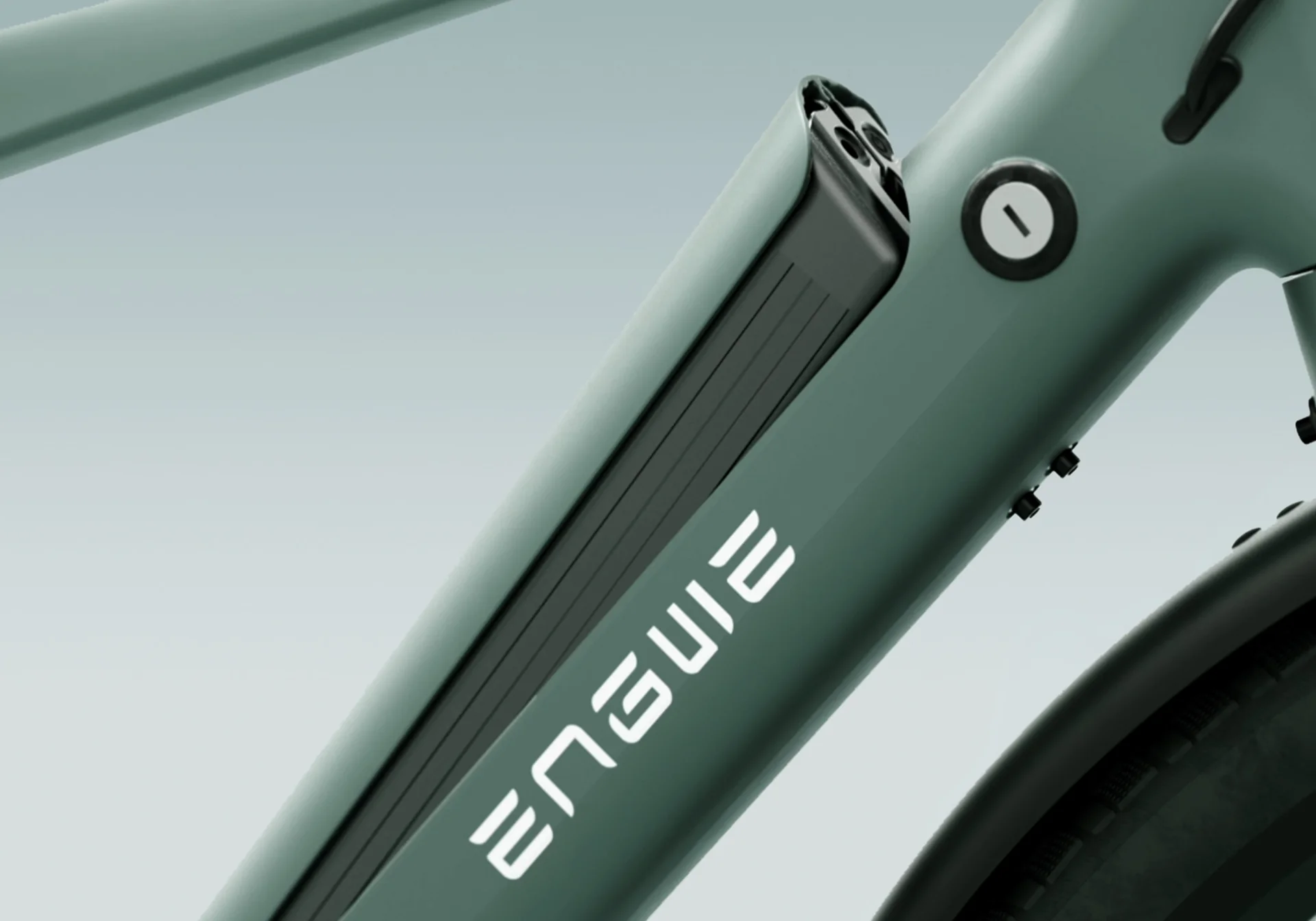
An e-bike battery typically lasts 3–5 years or around 500–1,000 full charge cycles, although the actual lifespan depends on the battery quality, how often the bike is used, charging habits, temperature and overall maintenance.
In terms of riding range, a modern e-bike battery can typically provide around 30–70 miles (48–113 km) per charge, but this can vary significantly depending on the battery capacity, motor, rider weight, terrain, riding speed and level of pedal assistance.
For example, a 500Wh e-bike battery may provide approximately 30–60 miles of real-world range, while a larger 750Wh battery can potentially deliver 45–80 miles under similar conditions. These figures are estimates rather than guarantees, as real-world range can vary considerably.
The important distinction is that battery lifespan and battery range are not the same thing. Battery lifespan refers to how many years the battery remains usable, while range refers to how far your e-bike can travel on a single charge.
With good charging and storage habits, an e-bike battery can remain useful for several years before its capacity starts to decline significantly. When the battery eventually loses too much capacity, it can usually be replaced without replacing the entire e-bike.
Most modern e-bike batteries are designed to last for several years of regular use. As a general guide, a good-quality lithium-ion e-bike battery can often provide around 3–5 years of useful service, although some batteries may last longer when they are used and maintained carefully.
Battery lifespan is usually measured in two different ways: years of use and charge cycles.
For a typical commuter or recreational rider, an e-bike battery may remain in good working condition for approximately 3–5 years. This does not mean that the battery suddenly stops working after five years. Instead, its ability to hold a charge gradually decreases over time.
For example, a battery that originally provided 50 miles of range might eventually provide only 35–40 miles under similar riding conditions. The battery is still usable, but its reduced capacity may make it less suitable for longer journeys.
How quickly this happens depends on several factors, including:
How frequently the battery is charged
How deeply it is discharged
Battery quality and cell chemistry
Storage temperature
Exposure to extreme temperatures
The rider’s typical level of motor assistance
How the battery is stored when the bike is not being used
The quality of the battery management system (BMS)
Another way manufacturers and battery specialists assess battery lifespan is through charge cycles.
One complete charge cycle generally means using an amount of energy equivalent to 100% of the battery’s capacity. It does not necessarily mean charging the battery from 0% to 100% in one session.
For example, if you use 50% of your battery on one ride and recharge it, then use another 50% before charging again, those two partial discharges are approximately equivalent to one full charge cycle.
Many modern lithium-ion e-bike batteries are designed to withstand hundreds of charge cycles, with approximately 500–1,000 cycles often used as a useful general reference point. However, the actual cycle life varies between battery manufacturers, cell types and battery management systems.
This means that a rider who uses their e-bike several times a week may get many years of useful service from the same battery, while someone who rides and charges their e-bike every day may reach the battery’s cycle limit sooner.
Usually, no.
Lithium-ion batteries generally experience gradual capacity loss rather than suddenly failing simply because they have reached a certain age.
As the battery ages, its maximum capacity decreases. You may notice that:
The battery needs charging more frequently
Your e-bike has less range than when it was new
The battery percentage drops more quickly during demanding rides
The motor may provide less assistance towards the end of a ride
Charging may appear to complete faster because the battery is holding less energy
A significant reduction in range is therefore often a better indication of battery ageing than the number of years since you purchased the e-bike.
For most UK riders, 3–5 years is a reasonable expectation for a good-quality e-bike battery, provided it is used and stored correctly.
However, there is no universal replacement date. A battery used occasionally for short urban rides may remain useful for considerably longer than one subjected to daily long-distance commuting, steep hills and frequent deep discharges.
When buying an e-bike, it is therefore worth looking beyond the battery’s advertised capacity. Battery quality, warranty coverage, replacement availability and the manufacturer’s support can be just as important as the number of watt-hours (Wh).
Tip: If you are comparing e-bikes, don’t choose a battery based solely on its advertised range. Consider how far you actually need to ride, how frequently you will charge the battery and whether a replacement battery will be readily available in the UK.
The distance an e-bike battery can cover on a single charge depends mainly on its capacity, measured in watt-hours (Wh). However, battery capacity is only one part of the equation. Motor efficiency, riding mode, terrain, rider weight, tyre pressure, temperature and riding speed can all have a significant effect on range.
As a general real-world guide, an e-bike can typically travel between 30 and 70 miles (48–113 km) per charge, although some models can achieve more in favourable conditions.
The following figures provide a useful starting point when comparing different e-bike batteries:
| Battery capacity | Typical real-world range* |
|---|---|
| 250Wh | 15–30 miles |
| 400Wh | 25–45 miles |
| 500Wh | 30–60 miles |
| 625Wh | 40–70 miles |
| 750Wh | 45–80 miles |
| 1,000Wh | 60–100+ miles |
*Estimated ranges are indicative rather than guaranteed. Actual range varies according to the bike, motor, rider, terrain, weather, speed and level of pedal assistance.
Wh stands for watt-hour and describes the amount of energy a battery can store.
In simple terms, a higher Wh rating generally means that an e-bike has more energy available and can potentially travel further between charges.
For example:
A 400Wh battery stores less energy than a 500Wh battery.
A 500Wh battery generally offers a good balance between range and weight.
A 750Wh battery provides substantially more energy for longer journeys.
A 1,000Wh battery can be useful for long-distance riding, cargo e-bikes or demanding terrain.
However, a larger battery does not automatically mean proportionally greater range. A heavier battery may also add weight to the bike, while a powerful motor can consume energy more quickly.
A 500Wh battery is one of the most common capacities found on modern e-bikes.
Under typical riding conditions, a 500Wh battery may provide approximately 30–60 miles per charge. A rider using a low level of pedal assistance on relatively flat roads may achieve considerably more, while frequent use of high assistance, steep hills, strong headwinds or carrying additional weight can reduce the range substantially.
For many urban commuters, a 500Wh battery provides enough capacity for several days of shorter journeys before recharging, depending on the distance travelled each day.
A 750Wh battery has around 50% more energy capacity than a 500Wh battery, assuming both batteries are rated accurately.
In real-world riding, this can translate to approximately 45–80 miles per charge, although the actual result depends heavily on how the e-bike is ridden.
A 750Wh battery can be particularly useful for:
Long-distance commuting
Hilly routes
Touring
Heavy riders
Cargo e-bikes
Riders who prefer higher assistance levels
People who want to charge less frequently
Two riders using the same e-bike and battery can achieve very different ranges.
For example, a rider travelling on flat roads at moderate speed with low pedal assistance may use significantly less energy than someone riding at higher speeds up steep hills with maximum assistance.
The main factors affecting e-bike range include:
Rider weight: A heavier combined rider-and-cargo weight requires more energy, particularly when accelerating and climbing.
Terrain: Hills can dramatically increase energy consumption. A predominantly flat route will generally provide better range than a route with repeated climbs.
Pedal-assist level: Higher assistance means the motor does more of the work and therefore consumes more battery energy.
Speed: Riding faster generally requires more energy, particularly at higher speeds where aerodynamic resistance increases.
Tyre pressure: Correctly inflated tyres reduce rolling resistance and can help improve efficiency.
Weather: Cold temperatures can temporarily reduce lithium-ion battery performance, while strong headwinds can also increase energy consumption.
Stop-start riding: Frequent acceleration from traffic lights and junctions generally consumes more energy than maintaining a steady speed.
Bike weight: A heavier e-bike requires more energy to accelerate and climb.
If maximum range is important, there are several simple ways to reduce energy consumption:
Use the lowest pedal-assistance level that feels comfortable.
Keep your tyres correctly inflated.
Avoid unnecessary acceleration and braking.
Maintain a steady, moderate speed.
Reduce unnecessary luggage and additional weight.
Keep the drivetrain clean and properly maintained.
Plan routes that avoid unnecessary steep climbs where possible.
Store and charge the battery according to the manufacturer’s instructions.
Ultimately, the best e-bike battery range is the range that matches your daily journey. A larger battery is not necessarily better if you mainly ride short distances, while a higher-capacity battery can be worthwhile for longer commutes, touring or routes with significant elevation changes.
Several factors can affect how long an e-bike battery remains usable. While battery chemistry and manufacturing quality play an important role, how you charge, use and store the battery can also make a significant difference over time.
It is useful to distinguish between two different concepts:
Battery lifespan: how many years and charge cycles the battery remains useful.
Battery range: how many miles the battery can provide on a single charge.
The factors below can affect one or both.
How you charge your e-bike battery can influence its long-term performance.
Lithium-ion batteries generally benefit from avoiding unnecessary extreme charging conditions. Regularly allowing a battery to become completely depleted can place additional stress on the cells, while leaving a battery at 100% for extended periods may also contribute to faster capacity degradation.
For long-term storage, follow the battery manufacturer’s recommended charge level and storage instructions.
For everyday use, follow the charging recommendations provided by your e-bike manufacturer rather than relying on a generic charging routine.
If you are not going to use the bike for an extended period, check the manufacturer’s recommendations for the appropriate storage charge level.
Temperature can have a significant effect on lithium-ion battery performance.
Very cold conditions can temporarily reduce the amount of energy a battery can deliver, meaning you may notice less range during winter rides. Extremely high temperatures can also accelerate battery degradation.
For this reason, avoid storing an e-bike battery in places exposed to excessive heat, such as a car on a hot day or directly next to a radiator.
When possible, store the battery in a cool, dry environment within the temperature range recommended by the manufacturer.
The more frequently an e-bike is used and charged, the more quickly its battery will accumulate charge cycles.
This does not mean that frequent riding is bad for the battery. Modern e-bike batteries are designed to be used regularly. However, someone commuting 15 miles every day will naturally accumulate charge cycles much faster than someone riding recreationally once or twice a month.
If you use your e-bike every day, good charging and storage habits become particularly important.
A battery does not necessarily have to be completely empty before it is recharged.
For example, using 30% of the battery and recharging it is a relatively shallow discharge, while repeatedly using almost the entire battery before charging represents a much deeper discharge.
Repeated deep discharges can contribute to battery wear over time. Where practical, avoid routinely running the battery down to a very low level, particularly if you know you will need to store the bike afterwards.
Always follow the specific recommendations provided by the battery manufacturer.
Not all e-bike batteries are manufactured to the same standard.
The quality of the individual lithium-ion cells, battery management system (BMS), construction and electronic components can all affect reliability and longevity.
This is one reason why the battery should be considered when choosing an e-bike, rather than looking only at motor power or advertised range.
A reputable manufacturer should provide clear information about the battery, charger, warranty and replacement options.
A powerful motor is not necessarily a problem for battery longevity, but how much assistance you use can have a major impact on energy consumption.
Riding continuously in a high-assistance mode can drain the battery faster, meaning you will need to recharge it more frequently.
A rider who uses lower assistance on flat sections and increases assistance only when necessary may achieve more miles from each charge and therefore accumulate fewer full charge cycles over the same period.
The combined weight of the rider, bike, luggage and any cargo affects how much energy the motor needs.
A heavier load requires more energy during acceleration and when climbing hills. This can reduce the distance available from a single charge.
If you regularly carry heavy luggage or use your e-bike for deliveries or cargo, choosing a battery with sufficient capacity can help ensure that you are not constantly operating at the limits of its range.
Flat roads generally require less energy than routes containing frequent or steep climbs.
If your regular commute involves significant elevation changes, you may use substantially more battery energy than someone travelling the same distance on flat terrain.
This is particularly relevant when comparing advertised range figures. A manufacturer may quote a maximum range under controlled or favourable conditions that does not reflect a hilly real-world commute.
Basic bike maintenance can also influence battery consumption.
Under-inflated tyres increase rolling resistance, requiring the motor to work harder. A poorly maintained drivetrain can have a similar effect.
Keeping your tyres correctly inflated, maintaining the chain and drivetrain, and ensuring the brakes are correctly adjusted can help the bike operate efficiently.
How an e-bike battery is stored when it is not being used can affect its long-term condition.
If you are storing your e-bike for several weeks or months, avoid leaving the battery completely empty. Equally, long-term storage at a permanently full charge may not be ideal.
Store the battery in a dry, temperature-controlled environment and follow the manufacturer’s instructions for long-term storage.
The biggest factors affecting e-bike battery life are battery quality, charging habits, temperature, frequency of use, depth of discharge and storage conditions.
You cannot prevent a lithium-ion battery from ageing, but sensible charging, appropriate storage and regular bike maintenance can help you get the maximum useful life from your investment.
For UK riders, it is also important to use the original or manufacturer-approved charger and follow the manufacturer’s safety instructions, particularly when charging a lithium-ion battery indoors.
When choosing an electric bike, battery capacity is one of the most important specifications to consider. Two of the most common capacities are 500Wh and 750Wh, but which one is better?
The answer depends on how far you ride, the terrain you encounter, how much assistance you use and how much weight the bike needs to carry.
A 500Wh battery is often the better choice for everyday urban commuting and shorter journeys, while a 750Wh battery can be more suitable for longer rides, hilly routes, touring and riders who want greater range between charges.
| Feature | 500Wh battery | 750Wh battery |
|---|---|---|
| Energy capacity | 500Wh | 750Wh |
| Relative capacity | Baseline | 50% higher |
| Typical real-world range* | 30–60 miles | 45–80 miles |
| Weight | Generally lighter | Generally heavier |
| Charging time | Usually shorter | Usually longer |
| Best for | Commuting and everyday riding | Longer rides and demanding routes |
| Typical use | Urban and mixed riding | Touring, hills and long-distance riding |
*Range estimates are indicative. Actual range depends on the motor, bike weight, rider weight, terrain, speed, weather, tyre pressure and assistance level.
The most obvious difference is energy capacity.
A 750Wh battery stores 50% more energy than a 500Wh battery. If all other factors were identical, this could theoretically provide around 50% more range.
Real-world results are not always this straightforward, however.
A bike equipped with a 750Wh battery may be heavier, and its motor may also be more powerful. If the rider uses higher assistance levels or travels at higher speeds, some of the additional energy can be consumed more quickly.
The result is that a 750Wh battery generally provides more range, but not necessarily exactly 50% more range in every situation.
For many UK commuters, 500Wh is more than enough.
If your daily journey is relatively short and takes place mainly on paved roads, a 500Wh battery can provide a useful combination of range, weight and charging convenience.
For example, someone commuting 8–10 miles each way may not need a 750Wh battery if they have access to charging at home or work.
A smaller battery can also make sense for riders who regularly need to carry their e-bike upstairs or combine cycling with public transport.
A 750Wh battery becomes more attractive when range and reduced charging frequency are priorities.
You may want to consider 750Wh if you:
Regularly ride more than 30–40 miles
Live in a hilly area
Carry heavy luggage or cargo
Use higher levels of pedal assistance
Ride for several hours at a time
Want to minimise the need to recharge during the day
Use your e-bike for touring or longer recreational rides
The additional capacity can provide a useful safety margin, particularly if your route includes hills or unpredictable weather.
Not necessarily.
A larger battery provides more stored energy, but it can also add weight, size and cost to an e-bike.
For a rider who mainly travels a few miles around town, carrying a large battery may provide little practical benefit.
A lighter 400Wh or 500Wh e-bike may actually be more convenient if portability is important.
This is particularly relevant for riders who need to lift their bike into a car, carry it up stairs or combine cycling with trains and other forms of public transport.
As a general guide:
Choose around 400–500Wh if:
Your journeys are relatively short
You mainly ride in urban areas
You want to keep the bike lighter
You can recharge regularly
Portability is important
Choose around 625–750Wh if:
You regularly ride longer distances
Your route includes significant hills
You carry additional weight
You prefer higher assistance levels
You want more range between charges
Consider 750Wh or more if:
You regularly undertake long-distance rides
You use a cargo or utility e-bike
You ride in particularly demanding terrain
You have limited opportunities to recharge
The right battery therefore depends less on choosing the biggest number and more on matching the battery capacity to your real-world riding needs.
When comparing electric bikes, don’t look at battery capacity in isolation.
A 500Wh battery paired with an efficient motor and lightweight bike can potentially deliver better real-world efficiency than a larger battery installed on a much heavier e-bike.
It’s worth considering the complete package, including:
Battery capacity
Motor efficiency
Bike weight
Motor assistance levels
Tyre size and pressure
Rider and cargo weight
Intended riding terrain
Charging time
Battery warranty
Availability and cost of replacement batteries
If you’re comparing different models, you can explore the range of electric bikes available from ST3IKE and compare their specifications, battery capacities and intended uses.
Ultimately, 500Wh is often the sweet spot for everyday riding, while 750Wh makes more sense for riders who genuinely need additional range or regularly ride in demanding conditions.
Most e-bike batteries take approximately 3–6 hours to fully charge, although charging time can vary depending on the battery capacity, charger output, battery condition and the manufacturer’s charging system.
A smaller battery with a standard charger may take only a few hours, while a larger 750Wh or 1,000Wh battery can take longer to reach 100%.
The following table provides a general indication of how long different battery sizes may take to charge using a standard charger:
| Battery capacity | Typical charging time |
|---|---|
| 250Wh | 2–4 hours |
| 400Wh | 3–4 hours |
| 500Wh | 3–5 hours |
| 625Wh | 4–6 hours |
| 750Wh | 4–7 hours |
| 1,000Wh | 5–8+ hours |
These figures are indicative only. Always follow the charging time and procedure recommended by the e-bike manufacturer.
Battery capacity is one of the main factors, but it is not the only one.
Battery capacity: A larger battery contains more energy and generally requires more time to recharge.
Charger output: Chargers are available with different power ratings. A higher-output charger can potentially recharge a compatible battery more quickly.
Battery management system: The battery’s management system controls charging and may reduce the charging rate as the battery approaches full capacity.
Starting charge level: Charging a battery from 20% to 80% will normally take considerably less time than charging it from almost empty to 100%.
Battery temperature: Lithium-ion batteries may have charging restrictions when they are too hot or too cold. Follow the manufacturer’s instructions and allow the battery to reach an appropriate temperature before charging if necessary.
Battery age and condition: An older battery may not behave exactly like a new one during charging. If charging behaviour changes significantly or the battery becomes unusually hot, consult the manufacturer or a qualified technician.
A typical 500Wh e-bike battery may take around 3–5 hours to reach a full charge with a standard charger.
For many commuters, this means that charging the battery overnight can provide enough energy for the following day’s journey.
However, you do not necessarily need to charge the battery to 100% after every short ride. If you have only used a small percentage of the battery, a shorter charging session may be sufficient for your next trip.
A 750Wh battery generally takes longer to charge than a 500Wh battery, with approximately 4–7 hours being a reasonable general estimate for a standard charger.
Some manufacturers offer higher-output chargers that can reduce charging time, but you should only use a charger specifically approved for your e-bike battery.
Using an incompatible charger can damage the battery and may create a serious safety risk.
Whether you should charge an e-bike battery overnight depends on the manufacturer’s instructions and the charging equipment being used.
For safety, it is important to:
Use the original charger or one specifically approved by the manufacturer.
Check the charger and battery for visible damage before charging.
Charge the battery in the location recommended by the manufacturer.
Keep the charging area clear of combustible materials.
Avoid charging a damaged or swollen battery.
Follow the manufacturer’s instructions regarding unattended charging.
UK fire-safety authorities, including the London Fire Brigade, recommend taking particular care when charging lithium-ion batteries and avoiding unsafe charging practices.
For additional guidance, see the UK Government’s recommendations on battery safety for e-cycle users.
Fast charging is not necessarily harmful when it is specifically supported by the battery and charger manufacturer.
However, charging lithium-ion cells at a higher rate can generate more heat, which is one reason charging systems use battery management electronics to control the process.
Do not assume that a higher-powered charger will safely charge your e-bike faster. The charger must be compatible with the battery’s voltage, charging specifications and battery management system.
If your e-bike came with a standard charger, using a significantly higher-output third-party charger simply to reduce charging time is not recommended unless the manufacturer explicitly states that it is compatible.
For everyday use, follow the battery manufacturer’s charging recommendations.
If you need maximum range for a long journey, charging to the recommended full level may be appropriate. For shorter journeys, however, you may not need to recharge to full capacity every time.
For long-term storage, follow the manufacturer’s specific instructions regarding the recommended charge level and storage conditions.
Safe charging is just as important as charging speed.
Always use a compatible charger and inspect the battery and charger regularly. Never attempt to charge a battery that is visibly damaged, swollen, leaking or behaving unusually.
It is also important to avoid covering the battery or charger while charging, as adequate ventilation helps prevent excessive heat accumulation.
For UK riders, the GOV.UK battery safety guidance for e-cycle users provides additional information about safe charging, storage and battery use.
A good charging routine is therefore not simply about getting your battery to 100% as quickly as possible. The priority should be using the correct charger, following the manufacturer’s instructions and charging the battery in a safe environment.
A good-quality e-bike battery can last for several years, but the way you use, charge and store it can affect how quickly its capacity declines.
There is no way to prevent a lithium-ion battery from ageing completely. However, following a few simple habits can help maximise battery lifespan, maintain range and reduce unnecessary battery wear.
The most important rule is also the simplest: follow the charging instructions supplied with your e-bike.
Different batteries can have different charging requirements, so avoid assuming that a charging routine that works for one e-bike is suitable for another.
Use the charger supplied with the bike or a charger specifically approved by the manufacturer.
You don’t normally need to wait until your battery is completely empty before charging it.
Repeatedly running a lithium-ion battery down to a very low charge level can contribute to battery wear over time.
If possible, recharge the battery before it becomes critically low, particularly if you are planning a long ride and need reliable range.
However, there is no need to constantly monitor the battery percentage. Modern e-bikes are designed for regular everyday use.
Temperature is an important factor in lithium-ion battery performance and longevity.
Avoid storing your e-bike battery:
In direct sunlight
Next to a radiator or heater
In an extremely hot vehicle
Outdoors in freezing conditions for extended periods
In damp or excessively humid locations
A cool, dry and suitable indoor environment is generally preferable, provided the manufacturer’s storage recommendations allow for it.
Cold weather can also temporarily reduce battery range. This does not necessarily mean that the battery has been permanently damaged; performance can improve again when the battery returns to a suitable temperature.
Battery longevity is not only about the battery itself.
Under-inflated tyres increase rolling resistance, meaning the motor needs to use more energy to maintain the same speed.
Check your tyre pressure regularly and keep it within the range recommended by the tyre or e-bike manufacturer.
This simple maintenance habit can help improve efficiency and increase the distance you can travel on a single charge.
Using maximum motor assistance constantly will generally consume more energy than using a lower assistance level.
If your e-bike has several pedal-assist modes, use the lowest level that provides a comfortable riding experience.
For example, you might use lower assistance on flat roads and increase the assistance when climbing hills or riding against a strong headwind.
This can reduce energy consumption and may allow you to complete more miles before recharging.
A clean and properly maintained drivetrain helps your e-bike operate efficiently.
Regularly check the:
Chain
Gears
Cassette
Chainring
Brake system
Bearings
Tyres
A poorly maintained bike can require more effort from both the rider and motor.
For more practical advice, see our guide to e-bike maintenance tips and make routine maintenance part of your regular riding schedule.
The heavier the combined bike, rider and cargo, the more energy the motor generally needs, particularly when accelerating or climbing.
You don’t need to strip your bike down to the bare minimum, but removing unnecessary luggage can help improve efficiency.
If you regularly carry heavy loads, consider whether a higher-capacity battery is more appropriate for your riding needs.
Aggressive acceleration and frequent changes in speed can consume more energy than maintaining a steady pace.
Where conditions allow, try to:
Accelerate progressively
Maintain a consistent speed
Anticipate traffic
Avoid unnecessary braking
Use pedal assistance strategically
Smooth riding can help maximise the distance available from each charge.
If you are not going to ride your e-bike for several weeks or months, pay particular attention to battery storage.
Do not simply leave the battery completely empty for a prolonged period.
Instead, follow the manufacturer’s instructions regarding:
Recommended storage charge
Storage temperature
Whether the battery should be removed from the bike
How frequently its charge should be checked
Long-term storage instructions can vary between manufacturers, so the manufacturer’s guidance should always take priority over generic advice.
Using an incompatible charger can damage the battery and potentially create a serious safety hazard.
Always use the original charger supplied with the e-bike or a replacement charger specifically approved by the manufacturer.
Never attempt to modify a charger or battery to make it compatible with another system.
For additional UK safety information, consult the GOV.UK guidance on battery safety for e-cycle users.
Pay attention to changes in the way your battery behaves.
You should seek professional advice if you notice:
Significant or sudden loss of range
Unusual overheating
Swelling or physical deformation
Damage to the battery casing
Strange smells
Smoke
Unusual noises
Charging problems
A damaged lithium-ion battery should not be used or charged until it has been assessed appropriately.
For most riders, looking after an e-bike battery doesn’t require complicated maintenance.
A simple routine is:
Charge correctly → avoid extreme temperatures → maintain the bike → use appropriate assistance → store the battery properly.
These habits can help reduce unnecessary battery wear and maximise the useful life of your e-bike battery.
Most importantly, always follow the specific instructions provided by your e-bike and battery manufacturer, as charging and storage recommendations can vary between models.
An e-bike battery does not normally stop working suddenly when it reaches the end of its lifespan. Instead, battery capacity gradually declines over time, reducing the distance you can travel between charges.
A reduction in range is therefore one of the most common signs that an e-bike battery is ageing.
However, reduced range does not automatically mean that the battery needs replacing. Before buying a new battery, it is worth checking whether other factors could be responsible.
One of the clearest signs of battery degradation is a noticeable reduction in range.
For example, if your e-bike originally travelled around 50 miles on a charge but now struggles to achieve 25–30 miles under similar conditions, the battery may have lost a significant amount of its usable capacity.
Remember that range can also be affected by:
Cold weather
Tyre pressure
Rider weight
Terrain
Wind
Riding speed
Pedal-assistance level
Bike maintenance
Compare battery performance under similar riding conditions before concluding that the battery has deteriorated.
If the battery indicator falls much faster than it used to, this can be another indication that the battery’s available capacity has decreased.
For example, you might notice that the battery remains at 100% for a relatively short period and then begins dropping rapidly during normal riding.
Battery displays are not always perfectly accurate, so a single unusual reading does not necessarily indicate a problem. Look for a consistent change in performance over several rides.
Another potential warning sign is a battery that appears to lose its charge unusually quickly while the e-bike is not being used.
A healthy battery should retain its charge reasonably well when stored according to the manufacturer’s instructions.
If you regularly discover that the battery has lost a significant amount of charge without being used, it may require professional inspection.
Changes in charging behaviour can also indicate that something is wrong.
For example, you may notice:
The battery takes significantly longer to charge
The charger frequently stops charging unexpectedly
The battery reaches its indicated full charge unusually quickly
The charging process behaves differently from when the battery was new
These symptoms do not necessarily mean that the battery itself has failed. The charger, charging port, connections or battery management system could also be responsible.
If charging behaviour changes significantly, have the system checked rather than immediately purchasing a replacement battery.
Lithium-ion batteries can become warm during use and charging, but unusual or excessive heat should not be ignored.
If the battery becomes significantly hotter than normal, stop using it and follow the manufacturer’s safety instructions.
A battery that is swollen, damaged, leaking, smoking or producing an unusual smell should not be charged or used.
Physical damage is a much more serious warning sign than normal capacity loss.
Do not continue using a battery that shows signs of:
Swelling
Cracks
Leakage
Severe impact damage
Deformation
Burn marks
Never attempt to open or repair a lithium-ion e-bike battery yourself.
A damaged battery should be handled according to the manufacturer’s safety instructions and assessed by an appropriately qualified professional.
Even a well-maintained e-bike battery eventually loses capacity.
If the battery has been used for several years and its range has declined significantly, replacement may be the most practical solution.
However, there is no universal age at which every e-bike battery should be replaced. Actual lifespan depends on battery quality, usage, charging cycles, temperature and storage conditions.
Replacing the battery can often be considerably more economical than buying an entirely new e-bike.
If the motor, frame, electronics and other components are still in good condition, a replacement battery can effectively extend the useful life of the bike.
The cost of replacing an e-bike battery in the UK can vary significantly depending on the battery capacity, brand, voltage, cell quality and e-bike model.
As a general guide, a replacement e-bike battery can cost anywhere from approximately £200 to £800 or more, with premium, high-capacity or manufacturer-specific batteries potentially costing considerably more.
The battery itself is only part of the potential cost. If a professional needs to diagnose the system or install the replacement, labour may also need to be considered.
| Battery type | Typical UK replacement cost* |
|---|---|
| Small / entry-level battery | £200–£350 |
| 400–500Wh battery | £300–£500 |
| 600–750Wh battery | £400–£650 |
| High-capacity / premium battery | £600–£800+ |
| Specialist or proprietary battery | £500–£1,000+ |
*Indicative price ranges only. Actual prices vary considerably between manufacturers, models and suppliers.
These figures should be used as a general guide rather than a fixed UK price list.
An e-bike battery is much more than a collection of lithium-ion cells.
A modern battery pack can include:
Lithium-ion cells
Battery management system (BMS)
Protective circuitry
Temperature monitoring
Charging electronics
Protective casing
Connectors
Mounting hardware
The battery also needs to be compatible with the e-bike’s electrical system.
A higher-capacity battery generally contains more cells and therefore requires more materials. Premium batteries may also use higher-quality cells and more sophisticated electronics.
Generally, yes.
A 750Wh battery will usually cost more than a comparable 500Wh battery, because it stores around 50% more energy and typically requires additional cells.
However, battery capacity is not the only factor determining price.
A proprietary battery designed specifically for a particular e-bike can cost considerably more than a generic battery with a similar capacity because of the electronics, mounting system and manufacturer-specific components involved.
When replacing a battery, you may encounter both manufacturer-original (OEM) batteries and third-party alternatives.
An OEM battery is designed specifically for the manufacturer’s e-bike system and is generally the safest option from a compatibility perspective.
Third-party batteries can sometimes be less expensive, but compatibility should never be assumed based solely on voltage or capacity.
The battery must be compatible with the:
Motor
Controller
Charger
Electrical connections
Battery management system
Mounting system
Firmware or communication system, where applicable
Using an incompatible battery can damage the e-bike and may create a safety risk.
In many cases, yes.
If the frame, motor, drivetrain, brakes and electronics are still in good condition, replacing the battery can be significantly cheaper than purchasing an entirely new e-bike.
For example, if you have a well-maintained e-bike that originally cost £2,000, spending several hundred pounds on a replacement battery may make considerably more financial sense than replacing the entire bike.
However, consider the condition of the rest of the e-bike before making the decision.
If the battery is old and the motor, drivetrain and other major components also require replacement, purchasing a newer e-bike may provide better overall value.
There are several ways to keep replacement costs under control.
Check the warranty first. If your battery is still covered by the manufacturer’s warranty, a fault may qualify for repair or replacement.
Confirm the exact model. Check the e-bike’s model number, battery voltage and capacity before ordering anything.
Compare the total cost. A cheaper battery is not necessarily better value if it has a shorter warranty or questionable compatibility.
Buy from a reputable supplier. Battery quality and safety should be more important than saving a small amount of money.
Consider the condition of the bike. If the battery is the only major component showing significant wear, replacement may be worthwhile.
In some circumstances, battery faults may be repairable by a specialist. However, lithium-ion battery packs should not be opened or repaired by unqualified individuals.
Battery packs contain high-energy cells and sophisticated electronics. Incorrect repairs can create electrical and fire hazards.
If you suspect a battery fault, contact the manufacturer, an authorised service centre or a suitably qualified battery specialist.
Before purchasing a replacement, check the manufacturer’s documentation and confirm:
Voltage — for example, 36V or 48V.
Capacity — measured in Wh or Ah.
Physical dimensions — the battery must fit the bike.
Connector type — the electrical connection must match.
Mounting system — frame and rack batteries may use different mounts.
Charger compatibility — the battery must be compatible with the appropriate charger.
Motor and controller compatibility — the electrical system must support the battery.
Warranty and support — consider who will provide assistance if something goes wrong.
If you are unsure, contact the e-bike manufacturer or a qualified specialist before ordering.
Replacing an e-bike battery in the UK can cost a few hundred pounds to £800 or more, depending on the battery and e-bike.
For many riders, replacing the battery is still a cost-effective way to extend the life of an otherwise healthy e-bike.
The cheapest battery is not necessarily the best choice. Compatibility, safety, quality, warranty and manufacturer support should all be considered before price.
If you regularly ride long distances, choosing an e-bike with the right battery capacity can make a significant difference to your riding experience.
However, the e-bike with the largest battery is not automatically the one with the best range. Motor efficiency, bike weight, riding position, tyres, terrain and pedal-assistance settings can all affect how much energy is consumed.
For UK riders, the best approach is to choose an e-bike whose battery capacity and overall design match the type of riding you actually do.
Before comparing individual models, consider these key specifications:
Battery capacity: Measured in Wh, this indicates how much energy the battery can store.
Motor efficiency: A more efficient motor can make better use of the available energy.
Bike weight: A lighter bike generally requires less energy to accelerate and climb.
Tyres: Wide or knobbly tyres can provide excellent grip but may increase rolling resistance.
Riding position: Your riding position can influence aerodynamic resistance, particularly at higher speeds.
Assistance modes: Multiple assistance levels allow you to balance performance and battery consumption.
Charging time: A larger battery may provide more range but can also take longer to recharge.
ST3IKE offers a broad selection of electric bikes designed for different types of riders, from lightweight urban commuters to high-capacity models designed for longer journeys.
The ENGWE EP-2 3.0 Boost is an interesting option for riders who want a combination of substantial battery range, fat tyres and a powerful motor.
ST3IKE lists the model with a 120 km claimed range, making it particularly relevant for riders looking beyond short urban commutes.
Its folding design also makes it more practical for riders who need to store or transport their e-bike.
Best for: longer commutes, mixed terrain and riders who want a versatile folding e-bike.
For riders prioritising battery capacity and long-distance capability, the ENGWE ENGINE PRO 2.0 is another model worth considering.
ST3IKE lists it with a 52V 16Ah Samsung lithium-ion battery, equivalent to approximately 832Wh, together with a claimed range of up to around 110 km in hybrid electric and pedal-assist mode.
The larger battery makes it particularly interesting for riders who regularly tackle longer journeys, hills or demanding terrain.
Best for: long-distance riding, hilly routes, touring and riders who want a high-capacity battery.
If portability is more important than maximum battery capacity, the ENGWE ZIP Lightweight Electric Bike 250W takes a different approach.
ST3IKE currently lists the ENGWE ZIP as one of its new arrivals and positions it as a lightweight urban commuter e-bike.
This is a useful example of why battery size should not be considered in isolation. A lightweight, compact e-bike can be a better choice for a rider whose daily journey is relatively short and who values portability over maximum range.
Best for: urban commuting, shorter journeys and riders who prioritise portability.
As a general guide:
| Riding style | Suggested battery capacity |
|---|---|
| Short urban journeys | 300–500Wh |
| Daily commuting | 400–625Wh |
| Longer commuting | 500–750Wh |
| Hilly routes | 625–750Wh+ |
| Touring and long-distance riding | 750Wh+ |
| Heavy cargo / demanding terrain | 750Wh+ |
These are guidelines rather than strict rules. A lightweight bike with an efficient motor and a 500Wh battery can be a better choice for some riders than a much heavier bike with a 750Wh battery.
Manufacturers commonly quote maximum or estimated ranges under particular test conditions.
Real-world performance can be significantly different.
When comparing e-bikes, consider the conditions under which the advertised range was measured and look at the complete specification rather than focusing on a single number.
For example, an e-bike advertised with a 120 km maximum range may achieve considerably less if you ride at high assistance levels, carry additional weight or regularly climb steep hills.
Conversely, a rider travelling at moderate speed on relatively flat roads with low pedal assistance may achieve a much longer range than expected.
There is no universally “best” e-bike battery.
For short urban trips, a compact and lightweight bike can be more practical than a heavy long-range model. For longer commutes, touring or hilly terrain, a larger battery can provide valuable additional range and reduce the need for frequent charging.
If you’re comparing models, explore the electric bikes available from ST3IKE and compare battery capacity, motor specifications, weight and intended use before making a decision.
The goal should not be to buy the biggest battery available. Instead, choose an e-bike that provides enough reliable range for your normal journeys while remaining comfortable and practical to use every day.
Before purchasing a replacement, check:
Battery voltage
Battery capacity
Physical dimensions
Connector type
Mounting system
Compatibility with the motor and controller
Manufacturer approval
Warranty
Availability of replacement parts
Never assume that a battery with the same voltage or Wh rating is automatically compatible with your e-bike.
The safest option is normally to purchase a replacement battery from the original manufacturer or an authorised supplier.
There is no single percentage that applies to every e-bike.
Battery capacity naturally decreases as lithium-ion cells age, but the point at which a battery becomes unsuitable depends on how you use the bike.
For a rider making short urban journeys, a moderate reduction in range may not be a problem. Someone commuting 30 miles every day may consider the same reduction unacceptable.
The practical question is therefore not simply “How old is my battery?”, but:
“Does the battery still provide enough reliable range for the way I use my e-bike?”
If the answer is yes, there may be no immediate reason to replace it.
Consider investigating a replacement if:
Your range has fallen substantially under comparable riding conditions.
The battery repeatedly fails to hold its charge.
Charging behaviour has changed significantly.
The battery is several years old and performance has noticeably declined.
The manufacturer or a qualified technician has identified degraded cells or another battery fault.
If the battery is physically damaged, swollen or showing signs of overheating, stop using it and follow the manufacturer’s safety guidance rather than continuing to test it yourself.
A replacement battery should always be compatible with the exact e-bike model and electrical system.
Charging an e-bike in the UK usually costs only a few pence. Depending on the battery size and your electricity tariff, a full charge typically costs between 10p and 30p.
Looking for the best legal e-bike in the UK? Discover the UK’s EAPC rules, 250W motor limit, 15.5 mph assistance limit, throttle rules and our top legal e-bike picks.
Find out how long an e-bike battery lasts, how many miles you can expect from a single charge, what affects battery lifespan, and how to keep your battery performing at its best.
| Cookie | Duration | Description |
|---|---|---|
| cookielawinfo-checbox-analytics | 11 months | This cookie is set by GDPR Cookie Consent plugin. The cookie is used to store the user consent for the cookies in the category "Analytics". |
| cookielawinfo-checbox-functional | 11 months | The cookie is set by GDPR cookie consent to record the user consent for the cookies in the category "Functional". |
| cookielawinfo-checbox-others | 11 months | This cookie is set by GDPR Cookie Consent plugin. The cookie is used to store the user consent for the cookies in the category "Other. |
| cookielawinfo-checkbox-necessary | 11 months | This cookie is set by GDPR Cookie Consent plugin. The cookies is used to store the user consent for the cookies in the category "Necessary". |
| cookielawinfo-checkbox-performance | 11 months | This cookie is set by GDPR Cookie Consent plugin. The cookie is used to store the user consent for the cookies in the category "Performance". |
| viewed_cookie_policy | 11 months | The cookie is set by the GDPR Cookie Consent plugin and is used to store whether or not user has consented to the use of cookies. It does not store any personal data. |