
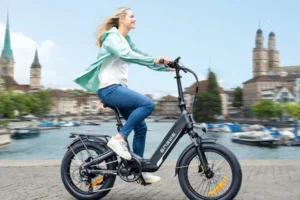
How Much Does It Cost to Charge an E-bike in the UK?
Charging an e-bike in the UK usually costs only a few pence. Depending on the battery size and your electricity tariff, a full charge typically costs between 10p and 30p.

The best legal e-bike in the UK is an electric bike that meets the requirements for an Electrically Assisted Pedal Cycle (EAPC). In Great Britain, this means the bike must have pedals that can propel it, a motor with a maximum continuous rated power of 250 watts, and motor assistance that cuts off when the bike reaches 15.5 mph (25 km/h).
For most riders, the best legal e-bike is not necessarily the most powerful or the fastest model. Instead, look for a bike that combines UK-compliant motor assistance, good battery range, comfortable geometry, reliable components and practical features for your type of riding.
A compliant EAPC can be ridden by anyone aged 14 or over and does not require a driving licence, registration, vehicle tax or motor insurance in Great Britain. It can be used on roads and cycle paths where ordinary pedal cycles are permitted, although it cannot be ridden on pavements.
When choosing a legal e-bike, pay particular attention to the manufacturer’s specifications. A bike advertised with a motor above 250W, assistance beyond 15.5 mph, or an unrestricted “off-road” mode may not qualify as an EAPC for use on public roads. GOV.UK specifically states that an e-cycle modified to exceed the legal power or speed limits becomes an unregistered motor vehicle in law.
In this guide, we’ll explain what makes an e-bike legal in the UK, the current EAPC rules, how motor power and speed limits work, what to look for when buying a compliant e-bike, and how to choose the best model for commuting, leisure riding and everyday use.
In Great Britain, an electric bike is legally treated as an Electrically Assisted Pedal Cycle (EAPC) when it meets specific requirements set out in UK law.
For an e-bike to qualify as an EAPC, it must meet three fundamental conditions:
| Requirement | UK legal limit |
|---|---|
| Pedals | The bike must have pedals capable of propelling it |
| Motor power | Maximum 250W continuous rated power |
| Motor assistance | Must cut off at 15.5 mph (25 km/h) |
These requirements are confirmed by the UK Government’s current EAPC guidance.
A legal EAPC must be fitted with pedals that are capable of propelling the cycle.
This is an important distinction between an electric bicycle and other electrically powered vehicles. An e-bike designed to be ridden primarily using its pedals can qualify as an EAPC when it also meets the other requirements.
The electric motor must have a maximum continuous rated power of 250 watts.
This is an important point when comparing e-bikes because online listings can sometimes advertise several different power figures.
For UK legal purposes, the relevant specification is the motor’s maximum continuous rated power, rather than simply a peak power figure that the motor may briefly produce.
A bike advertised with a higher peak output is therefore not automatically illegal, but its manufacturer specifications and EAPC compliance need to be considered carefully.
The motor must stop providing electrical assistance when the e-bike reaches 15.5 mph (25 km/h).
This does not mean that an e-bike cannot physically travel faster than 15.5 mph.
A rider can exceed 15.5 mph through their own pedalling, downhill momentum or other non-motorised means. The important point is that the electric motor must no longer provide assistance above the legal threshold.
This distinction is often misunderstood when people search for the “fastest legal e-bike in the UK.”
No.
A 250W motor alone does not automatically make an e-bike legal.
The bike must meet the other EAPC requirements as well, including the pedal requirement and the 15.5 mph assistance cut-off.
It is also important to consider the bike’s configuration, controls and compliance with applicable construction and safety requirements.
The UK Government specifically warns that e-cycles which do not comply with the EAPC requirements can instead be treated as motor vehicles, with very different legal requirements.
If an electric cycle does not meet the EAPC requirements, it may be legally treated as a motor vehicle rather than an ordinary pedal cycle.
That can mean requirements such as:
Registration
Motor insurance
Vehicle tax
An appropriate driving licence
An approved motorcycle helmet
Type approval or individual vehicle approval
may apply, depending on the vehicle’s classification.
This is why checking the legal specification of an e-bike before buying it is so important.
This is another area where buyers need to be particularly careful.
Some e-bikes are sold with an “off-road” or unrestricted mode that allows the motor to provide assistance above 15.5 mph.
GOV.UK guidance states that vehicles with an off-road mode capable of propelling the bike above 15.5 mph do not, in the Government’s view, comply with the EAPC regulations and are considered motor vehicles.
Therefore, an e-bike should not be considered UK road-legal simply because it has a setting labelled “legal mode” that can be changed by the rider.
You may come across articles or social media posts claiming that the UK has increased the legal e-bike motor limit from 250W to 500W.
This is not the current EAPC rule.
The Government previously consulted on a proposal to increase the maximum continuous rated motor power to 500W, but the current GOV.UK EAPC guidance still specifies 250W.
For anyone buying an e-bike in the UK today, the safest approach is therefore to check the current GOV.UK requirements rather than relying on older articles or proposed legislation.
Before buying an e-bike, check that:
✓ It has pedals capable of propelling the bike
✓ The motor’s maximum continuous rated power is no more than 250W
✓ Electrical assistance cuts off at 15.5 mph (25 km/h)
✓ The bike has not been modified to bypass these limits
If these requirements are met and the other applicable EAPC requirements are satisfied, the e-bike can generally be treated as an EAPC rather than a motor vehicle in Great Britain.
For the latest legal requirements, always check the official GOV.UK electric bike rules before purchasing or modifying an e-bike.
Once an e-bike meets the UK requirements for an Electrically Assisted Pedal Cycle (EAPC), it is generally treated in law in the same way as a conventional pedal cycle.
This means that a compliant e-bike can be used on public roads and cycle facilities where bicycles are permitted. However, there are important differences between cycle lanes, cycle tracks, shared-use paths and pavements.
A compliant EAPC can generally be ridden:
On public roads
In cycle lanes
On cycle tracks
On routes where conventional bicycles are permitted
On signed shared-use routes where cycling is permitted
The Highway Code provides specific rules for cyclists using cycle lanes and cycle tracks, so riders should always follow the relevant signs, markings and restrictions.
Yes.
A legal EAPC can be ridden on public roads in Great Britain in the same general way as a conventional bicycle.
You do not need a driving licence, vehicle registration, vehicle tax or motor insurance for a compliant EAPC. The minimum age for riding an EAPC on public roads is 14.
You must, however, follow the Highway Code and comply with normal cycling rules.
Yes, where the cycle lane is available for cyclists.
A compliant EAPC is treated as a pedal cycle, so it can use cycle lanes where appropriate.
The Highway Code distinguishes between different types of cycle facilities. Cycle lanes are generally marked on the road, while cycle tracks are routes intended for cyclists that are physically separated from motor traffic or otherwise located away from it.
Always follow local signs and road markings, particularly where a cycle facility has restrictions.
Yes, where cycling is permitted.
Cycle tracks are different from cycle lanes. They can be physically separated from the road and may run alongside pedestrian footpaths.
Some cycle tracks are shared with pedestrians. In these situations, riders should take extra care, give pedestrians plenty of room and be prepared to slow down or stop.
The Highway Code specifically advises cyclists to use the side intended for cyclists where a cycle track is divided from a pedestrian path.
Generally, no.
A pavement is intended primarily for pedestrians, and an ordinary EAPC should not be ridden on a pavement unless the route is specifically designated or signed for cycling.
This distinction is important because a cycle track or shared-use path is not automatically the same thing as a pavement.
If you are unsure whether a particular route permits cycling, check the signs and markings before riding on it.
Potentially, yes.
Some paths are specifically designated for both pedestrians and cyclists. Where cycling is permitted, a legal EAPC can generally use the route.
However, riders should take particular care around pedestrians and other vulnerable road users.
Reduce your speed when necessary, leave plenty of space when passing and be prepared to stop.
The rules depend on the type of route and its designation.
An EAPC is treated as a pedal cycle, but not every route that pedestrians or horses can use is automatically available to cyclists.
Before using a bridleway, restricted byway or other off-road route, check the local access rights and signs.
This is particularly important because public road legality does not automatically mean that every off-road path is open to bicycles.
In Great Britain, you must be at least 14 years old to ride an EAPC legally.
There is no requirement for the rider of a compliant EAPC to hold a driving licence.
There is currently no general legal requirement to wear a motorcycle-style helmet when riding a compliant EAPC.
However, wearing a suitable cycle helmet is strongly recommended for safety.
This should not be confused with the rules applying to electric cycles that do not qualify as EAPCs. If an electric cycle is legally classified as a motor vehicle, different requirements can apply.
A compliant EAPC does not require motor vehicle insurance in Great Britain.
The same applies to vehicle registration and vehicle excise duty: an EAPC that complies with the regulations does not need to be registered, insured or taxed as a motor vehicle.
Some riders may nevertheless choose to purchase bicycle insurance or include their e-bike within a suitable home insurance policy.
This is where the rules become much more serious.
If an electric cycle does not meet the EAPC requirements, it can be treated as a motor vehicle rather than an ordinary bicycle.
Depending on its classification, this can mean requirements for registration, insurance, taxation, an appropriate driving licence, an approved motorcycle helmet and vehicle approval.
GOV.UK specifically states that non-compliant EAPCs are treated as motor vehicles under the relevant road traffic legislation.
This is why it is important to check an e-bike’s legal specification before buying or modifying it.
Before riding an e-bike on public roads or cycle facilities, make sure:
✓ The bike has pedals capable of propelling it
✓ The motor has a maximum continuous rated power of no more than 250W
✓ Electrical assistance cuts off at 15.5 mph (25 km/h)
✓ You are aged 14 or over
✓ You follow the Highway Code and local signs
✓ You do not ride on pedestrian-only pavements or routes where cycling is prohibited
A compliant EAPC can provide most of the benefits of an electric bike without the registration, tax and driving-licence requirements associated with motor vehicles.
Once you understand the UK EAPC rules, choosing a legal e-bike becomes much easier. The key is to look beyond the advertised motor power and check the bike’s maximum assisted speed, pedal-assist system and overall configuration.
For this guide, we have focused on models available from ST3IKE whose published specifications indicate a 250W motor and a maximum assisted speed of 25 km/h (15.5 mph).
| E-bike | Motor | Maximum assisted speed | Best for |
|---|---|---|---|
| ADO Air 20 Pro / Ultra 2026 | 250W | 25 km/h | Best overall folding commuter |
| ADO Air Carbon Pro | 250W | 25 km/h | Best premium lightweight option |
| ADO Air 20 Carbon | 250W | 25 km/h | Best for portability |
| HITWAY BK9 | 250W | 25 km/h | Best fat-tyre commuter |
| ENGWE C20 Pro | 250W | 25 km/h | Folding and versatile riding |
These specifications are based on the product information currently published by ST3IKE. Always check the manufacturer’s current specifications and configuration before purchasing, particularly if a model is available in different versions.
The ADO Air 20 Pro / Ultra 2026 is one of the strongest choices for riders looking for a practical UK-legal folding e-bike.
ST3IKE lists the bike with a 250W Bafang motor, a maximum speed of 25 km/h (15.5 mph) and a torque sensor with pedal assistance. The published specifications also state that the bike has no throttle.
The combination of a folding aluminium frame, 20-inch wheels, hydraulic disc brakes and a carbon belt drive makes it particularly well suited to urban commuting.
The Air 20 Pro / Ultra also offers a claimed power-assisted range of up to 100 km (60 miles), although real-world range will depend on riding conditions, assistance level, rider weight and terrain.
Best for: UK commuters who want a lightweight, folding and low-maintenance e-bike.
For riders who want premium materials and very low weight, the ADO Air Carbon Pro is an interesting option.
ST3IKE lists a 250W Bafang H700 motor, a maximum assisted speed of 25 km/h (15.5 mph) and a torque-sensor pedal-assist system. The product specification also states “Throttle: No”.
At approximately 16.2 kg, the Carbon Pro is considerably lighter than many folding electric bikes, making it particularly attractive for commuters who need to carry their bike upstairs or onto public transport.
It also features a carbon-fibre frame, carbon belt drive, hydraulic disc brakes and integrated GPS functionality.
Best for: commuters who prioritise low weight, premium construction and portability.
If carrying weight is your biggest concern, the ADO Air 20 Carbon is particularly noteworthy.
ST3IKE lists this model at just 12.5 kg, with a 250W Bafang motor and a maximum assisted speed of 25 km/h (15.5 mph). It uses a torque sensor and does not have a throttle.
The lightweight carbon-fibre frame and three-section folding design make it particularly suitable for commuters combining cycling with trains, offices or apartment living.
The bike is also listed with a claimed power-assisted range of up to 100 km, although advertised maximum range should always be treated as an estimate rather than a guaranteed real-world figure.
Best for: riders who need to carry, store or transport their e-bike regularly.
Not everyone wants a lightweight folding commuter.
For riders who prefer a more substantial bike with wide tyres, the HITWAY BK9 is another option available through ST3IKE.
Its published specifications state a 250W motor and a maximum speed of 25 km/h (15.5 mph). The bike uses wide 26 × 4.0-inch fat tyres and front and centre suspension to provide additional comfort over less-than-perfect surfaces.
The combination of wide tyres and suspension makes it a different proposition from the lightweight ADO models.
Best for: riders who prioritise stability, comfort and wide tyres over minimum weight.
The ENGWE C20 Pro is another folding model with specifications that match the key UK EAPC power and speed limits.
ST3IKE lists a 250W Bafang motor and a maximum speed of 25 km/h (15.5 mph). The bike also features a 36V 15.6Ah removable lithium-ion battery, Shimano 7-speed gearing, 20-inch tyres and a folding aluminium frame.
However, there is an important caveat for anyone researching this model today: ST3IKE currently marks the C20 Pro as out of stock.
For that reason, we would consider it a useful reference point rather than the first recommendation for someone looking to buy immediately.
Best for: riders interested in a versatile folding e-bike, subject to availability.
The best choice depends on how you intend to use the bike.
For everyday commuting: the ADO Air 20 Pro / Ultra 2026 offers a strong combination of comfort, portability and practical features.
For minimum weight: the ADO Air 20 Carbon is particularly impressive at 12.5 kg.
For premium urban riding: the ADO Air Carbon Pro combines low weight with a carbon-fibre frame, belt drive and integrated technology.
For stability and fat tyres: the HITWAY BK9 is a better fit for riders who prefer a wider, more substantial platform.
For a folding all-rounder: the ENGWE C20 Pro is worth considering if it becomes available again.
Even when a product page states 250W and 25 km/h, buyers should check the exact version being sold.
Some e-bikes are available internationally in different configurations, with different motors, controllers, throttles or speed settings.
If you are buying an e-bike specifically for use on UK public roads and cycle facilities, confirm that the exact UK configuration complies with the EAPC requirements.
A bike that can be configured or modified to provide motor assistance above the legal limit may not qualify as an EAPC in that configuration.
For this reason, specifications should always be checked against the current UK Government rules rather than relying solely on the words “road legal” in a product listing.
If you’re looking for a legal e-bike for commuting, leisure riding or everyday transport, you can compare the range of electric bikes available from ST3IKE.
Look at the motor rating, maximum assisted speed, battery capacity, weight and control system before making your choice.
Most importantly, make sure the specific model and configuration you purchase meets the current UK EAPC requirements.
For commuting, the best legal e-bike is not necessarily the one with the biggest battery or most powerful motor. A good commuter e-bike should be comfortable, reliable, easy to handle and practical to store, while meeting the UK’s EAPC requirements.
For most UK commuters, a 250W e-bike with motor assistance up to 15.5 mph (25 km/h) is the ideal starting point. From there, factors such as weight, battery range, folding capability, tyres, braking system and weather resistance become increasingly important.
Before choosing a model, consider:
Weight: A lighter e-bike is much easier to carry into an office, apartment or train.
Battery range: Choose enough range for your daily commute plus a sensible reserve for unexpected detours or poor weather.
Folding design: A folding e-bike can be particularly useful if you combine cycling with public transport or have limited storage space.
Comfort: Your commute may involve uneven roads, potholes and longer periods in the saddle. Geometry, tyres and suspension can make a significant difference.
Braking: Reliable hydraulic or mechanical disc brakes are particularly useful in wet UK conditions.
Maintenance: A belt-drive system can reduce some of the routine maintenance associated with a traditional chain and derailleur system.
Legal compliance: Most importantly, confirm that the exact bike configuration meets the current UK EAPC requirements.
For many urban commuters, the ADO Air 20 Pro / Ultra 2026 is one of the most complete options in the ST3IKE range.
The model is listed with a 250W Bafang motor, 25 km/h maximum assisted speed and torque-sensor pedal assistance. The product specification also states that it has no throttle.
Its folding 20-inch design makes it practical for city living, while hydraulic disc brakes, a carbon belt drive and a relatively lightweight frame add to its commuter appeal.
The claimed assisted range of up to 100 km provides plenty of capacity for many daily commutes, although real-world range will depend on riding conditions and assistance level.
Best for: commuters looking for a premium, compact and low-maintenance folding e-bike.
If your commute involves stairs, trains or carrying the bike regularly, weight becomes particularly important.
The ADO Air Carbon Pro weighs approximately 16.2 kg and combines a carbon-fibre frame with a 250W Bafang motor and 25 km/h maximum assisted speed.
The carbon belt drive is another advantage for urban riders because it avoids some of the maintenance associated with a conventional chain.
With hydraulic disc brakes, torque-sensor assistance and integrated GPS functionality, it is designed as a premium urban commuter rather than simply a basic electric bicycle.
Best for: commuters who prioritise low weight, premium components and portability.
For riders who regularly combine cycling with public transport, the ADO Air 20 Carbon deserves particular attention.
At approximately 12.5 kg, it is significantly lighter than many electric bikes.
That makes a practical difference if you need to carry the bike up stairs, lift it onto a train or store it beneath a desk.
The bike is listed with a 250W motor, 25 km/h assisted speed and torque-sensor pedal assistance, making it an interesting option for riders looking for a lightweight UK-legal commuter.
Best for: train commuters, apartment dwellers and anyone who regularly needs to carry their e-bike.
The ENGWE ZIP Lightweight Electric Bike 250W takes a slightly different approach.
Rather than competing with high-capacity long-range e-bikes, its appeal is its compact and lightweight urban-oriented design.
For a commuter whose journey is relatively short, reducing the size and weight of the bike can be more useful than carrying a much larger battery.
The ENGWE ZIP can therefore make sense for riders who prioritise easy handling, storage and everyday practicality.
Best for: short urban commutes and riders who prioritise portability.
A useful rule is to calculate your normal round-trip distance and then add a reasonable reserve.
For example, if your commute is:
5 miles each way: around 10 miles per day
10 miles each way: around 20 miles per day
15 miles each way: around 30 miles per day
20 miles each way: around 40 miles per day
You don’t necessarily need a battery with exactly double your daily distance. Factors such as weather, hills, temperature and assistance level can change real-world range.
Having some reserve is particularly useful in the UK, where strong headwinds, cold temperatures and wet conditions can make a noticeable difference to energy consumption.
A folding e-bike can be particularly useful for commuters who:
Live in an apartment
Have limited storage space
Need to carry the bike upstairs
Combine cycling with public transport
Want to store the bike at work
Frequently transport the bike by car
A conventional non-folding e-bike may be preferable if you have plenty of storage and want larger wheels, a more traditional riding position or maximum comfort over longer distances.
There is no universally better design. The best option depends on how the bike fits into your daily routine.
For most urban commuters, the ideal legal e-bike combines:
250W motor + 15.5 mph assistance limit + sufficient battery range + manageable weight + reliable brakes + comfortable geometry.
If portability is your priority, the ADO Air 20 Carbon is particularly interesting. If you want a more premium all-round folding commuter, the ADO Air 20 Pro / Ultra 2026 is a strong option. For riders who want a lightweight premium design, the ADO Air Carbon Pro is worth considering.
Before buying, always check the specifications of the exact model and configuration and confirm that it meets the current UK EAPC requirements.
A folding e-bike can be one of the most practical choices for UK riders who need to combine cycling with public transport, live in an apartment or have limited storage space.
However, folding capability alone does not determine whether an e-bike is legal. The bike must still meet the requirements for an Electrically Assisted Pedal Cycle (EAPC), including the 250W maximum continuous rated motor power and 15.5 mph (25 km/h) assistance limit.
When comparing folding electric bikes, consider:
UK legal motor specification
Weight
Folded dimensions
Wheel size
Battery capacity
Range
Braking system
Folding mechanism
Ease of carrying
Frame and component quality
For commuters, weight can be particularly important. A bike that is technically foldable but weighs more than 25 kg may still be difficult to carry onto public transport or up a flight of stairs.
The ADO Air 20 Carbon stands out for riders who put portability at the top of their list.
According to the specifications published by ST3IKE, the bike weighs approximately 12.5 kg, making it exceptionally light compared with many folding e-bikes.
It combines a carbon-fibre frame with a 250W Bafang motor, 25 km/h maximum assisted speed and torque-sensor pedal assistance.
The three-section folding design also makes it particularly suitable for commuters who need to transport or store their bike regularly.
Best for: maximum portability, train commuters and riders with limited storage.
For riders who want more features and a slightly more conventional folding-bike experience, the ADO Air 20 Pro / Ultra 2026 is one of the strongest options.
The model is listed with a 250W Bafang motor, 25 km/h maximum assisted speed and a torque sensor.
Its 20-inch wheels provide a useful balance between compact folding dimensions and ride comfort, while hydraulic disc brakes and a carbon belt drive make it particularly well suited to everyday urban use.
The bike is also listed with a claimed assisted range of up to 100 km.
Best for: commuters who want a balance of portability, comfort, range and premium components.
The ADO Air Carbon Pro is aimed at riders who want a premium folding e-bike without accepting the weight normally associated with electric bicycles.
ST3IKE lists the bike at approximately 16.2 kg, with a 250W Bafang H700 motor and 25 km/h maximum assisted speed.
Its carbon-fibre frame, carbon belt drive, hydraulic disc brakes and integrated GPS functionality make it particularly attractive to riders looking for a sophisticated urban e-bike.
It also uses a torque sensor and is listed without a throttle.
Best for: premium urban commuting and riders who want low weight without moving to a basic specification.
The ENGWE C20 Pro is another folding model worth knowing about.
It is listed with a 250W Bafang motor and a 25 km/h maximum assisted speed, together with a 36V 15.6Ah removable battery.
The 20-inch wheels, Shimano 7-speed drivetrain and folding aluminium frame make it a versatile option for everyday riding.
However, availability is important: ST3IKE currently lists the C20 Pro as out of stock, so prospective buyers should check availability before considering it.
Best for: riders looking for a practical folding design, subject to availability.
One of the biggest compromises when choosing a folding e-bike is the relationship between weight and battery capacity.
A larger battery generally adds weight, while a lightweight bike may need a smaller battery to remain easy to carry.
Think about how you will actually use the bike.
If you need to carry it onto a train every morning, saving several kilograms could be more valuable than having an additional 20 or 30 miles of theoretical range.
If you rarely carry the bike and regularly ride long distances, a larger battery may be the better choice.
Yes. There is no separate legal category for folding e-bikes.
A folding e-bike can qualify as an EAPC in exactly the same way as a conventional electric bicycle, provided it meets the relevant requirements.
The fact that a bike folds does not change the motor power or assistance-speed limits.
Before buying, check that the specific model:
✓ Has pedals capable of propelling the cycle
✓ Has a maximum continuous rated motor power of no more than 250W
✓ Cuts motor assistance at 15.5 mph (25 km/h)
✓ Has not been modified to bypass the legal limits
For maximum portability, the ADO Air 20 Carbon is particularly compelling.
For an all-round folding commuter, the ADO Air 20 Pro / Ultra 2026 offers an excellent balance of practicality and equipment.
For a premium lightweight option, the ADO Air Carbon Pro is designed for riders who are prepared to pay more for low weight and higher-end components.
The ENGWE C20 Pro remains an interesting alternative when available.
The important thing is to choose a folding e-bike that fits your actual routine rather than simply choosing the bike with the smallest folded dimensions.
A folding e-bike should be easy enough to carry, compact enough to store and comfortable enough to ride regularly.
As with any e-bike purchased for use in the UK, always verify the specifications of the exact model and configuration against the latest GOV.UK EAPC requirements before purchasing.
You don’t need to spend several thousand pounds to find a good legal e-bike in the UK.
For under £1,000, there are several electric bikes that can provide practical performance for commuting, leisure riding and everyday transport while meeting the key EAPC requirements.
When shopping in this price range, however, it is particularly important to look beyond the headline motor power and advertised range. Check the motor’s continuous rated power, maximum assisted speed and exact configuration before buying.
At this price point, you can typically expect features such as:
A 250W electric motor
Assistance up to 15.5 mph (25 km/h)
Removable lithium-ion battery
Multiple pedal-assistance modes
Mechanical or hydraulic disc brakes
7-speed or similar gearing
LED lighting
Aluminium frame
Folding designs on some models
The exact specification varies considerably between brands and models.
The ENGWE ZIP Lightweight Electric Bike 250W is particularly interesting for riders looking for an affordable, compact e-bike for urban journeys.
Its 250W motor and lightweight design make it more focused on everyday practicality than maximum off-road performance.
For commuters travelling relatively short distances, a lightweight bike can be more useful than a heavier model equipped with a much larger battery.
Best for: short urban commutes, everyday transport and riders who prioritise portability.
The ENGWE C20 Pro is another model worth considering when available.
Its published specification includes a 250W Bafang motor, 25 km/h maximum assisted speed, 36V 15.6Ah removable battery and 20-inch wheels.
The folding aluminium frame makes it particularly suitable for riders with limited storage space or commuters who combine cycling with public transport.
However, ST3IKE currently lists this model as out of stock, so availability should be checked before purchasing.
Best for: folding-bike buyers looking for a versatile urban option.
For riders who prefer stability and wider tyres, the HITWAY BK9 provides a very different riding experience.
The model is listed with a 250W motor and a maximum assisted speed of 25 km/h (15.5 mph).
Its 26 × 4.0-inch fat tyres provide a wide contact patch and can be particularly useful on rougher surfaces, although the larger tyres and frame make it substantially different from a lightweight commuter.
Best for: riders who prioritise stability, comfort and wide tyres.
For many riders, absolutely.
If your commute is relatively short and mostly flat, you may not need an expensive high-capacity e-bike.
A £1,000 e-bike can provide everything required for a typical urban journey:
250W motor → pedal assistance → 15.5 mph maximum assisted speed → rechargeable battery → conventional bicycle controls.
The most important consideration is whether the bike suits your journey.
For longer commutes, you may benefit from spending more on a larger battery, better components or a lighter frame.
Compared with premium e-bikes costing £2,000–£4,000 or more, an e-bike under £1,000 may have:
A heavier frame
Less sophisticated suspension
Mechanical rather than hydraulic brakes
A heavier battery
More basic components
A less refined motor
Fewer integrated electronics
None of these automatically makes the bike unsuitable.
For many riders, a simpler e-bike that is reliable and easy to maintain can represent excellent value.
Before buying, check these specifications carefully:
1. Motor: Confirm the maximum continuous rated power is no more than 250W.
2. Assisted speed: Confirm that motor assistance cuts off at 15.5 mph (25 km/h).
3. Pedals: The bike must have pedals capable of propelling it.
4. Battery: Look at the Wh capacity rather than relying only on the advertised maximum range.
5. Weight: Consider whether you will need to carry the bike regularly.
6. Brakes: Disc brakes are useful for everyday UK riding, particularly in wet conditions.
7. Warranty: Check what warranty and after-sales support are provided.
8. Configuration: Make sure the exact version sold in the UK matches the specification you have checked.
Not necessarily.
The cheapest model may save money initially but could compromise on range, comfort, braking performance, component quality or after-sales support.
For a bike you intend to use every day, it can be worth spending slightly more for features that genuinely improve your riding experience.
A good-value e-bike should therefore be judged on total value rather than purchase price alone.
A budget of £1,000 is enough to buy a capable legal e-bike in the UK, particularly if your priority is commuting or short-to-medium urban journeys.
Models such as the ENGWE ZIP, ENGWE C20 Pro and HITWAY BK9 demonstrate the range of options available at this price level.
However, always check the current price and availability, and verify the exact specifications of the model you are buying against the current UK EAPC rules.
A lower price should never mean compromising on legal compliance, battery safety or build quality.
One of the most common questions when buying an e-bike in the UK is: “Is a 250W e-bike legal?”
The short answer is yes, a 250W e-bike can qualify as an EAPC, provided it also meets the other applicable requirements, including the 15.5 mph (25 km/h) maximum assisted speed and pedal requirement.
However, understanding what “250W” actually means is important because e-bike manufacturers and retailers may also advertise higher peak power figures.
The UK’s EAPC rules specify a maximum continuous rated power of 250 watts for the electric motor.
This is different from the maximum or peak power that a motor may temporarily produce under certain conditions.
For example, a motor may be marketed with specifications such as:
250W rated power / 500W peak power
The 500W figure describes the motor’s potential temporary output rather than its continuous rated power.
For UK EAPC purposes, the continuous rated power is the key figure specified in the regulations.
| Specification | What it means |
|---|---|
| Rated / continuous power | The motor’s continuous rated output |
| Peak power | The higher output the motor may temporarily deliver |
| Battery voltage | The electrical voltage supplied by the battery |
| Torque | The rotational force produced by the motor |
These figures describe different characteristics and should not be treated as interchangeable.
A motor with a higher peak-power figure is not automatically equivalent to a motor with that same continuous rated power.
This is where buyers need to be careful.
The current EAPC rules in Great Britain specify a maximum continuous rated power of 250W.
Therefore, an e-bike marketed as having a 500W continuous rated motor does not meet the standard EAPC power requirement.
You may see references online to a proposed increase from 250W to 500W. The UK Government has previously consulted on changing the rules, but the current EAPC guidance still specifies 250W continuous rated power.
Always check the current GOV.UK rules rather than relying on older articles, social media posts or retailer claims.
Not necessarily.
The important distinction is between the motor’s continuous rated power and its temporary peak output.
A manufacturer may state that a motor has 250W continuous rated power while also specifying a higher peak output.
However, because e-bike specifications and configurations can vary, buyers should not assume that any bike labelled “250W” is automatically compliant.
Check the manufacturer’s documentation and the exact configuration being sold in the UK.
Motor power is not the only specification that affects how an e-bike feels.
Torque, measured in Newton metres (Nm), describes the rotational force produced by the motor.
Higher torque can be particularly useful when:
Starting from a standstill
Climbing hills
Carrying additional weight
Riding on loose or uneven surfaces
A 250W motor with a well-designed control system and useful torque can therefore provide a very different riding experience from another 250W motor.
This is one reason why simply comparing wattage figures is not enough when choosing an e-bike.
No.
A 250W motor can provide very useful assistance for everyday cycling.
The UK legal limit does not mean that an e-bike can only travel at 15.5 mph. It means that electric motor assistance must cut off at that speed.
The rider can continue travelling faster through their own pedalling or downhill momentum.
For commuting, leisure riding and everyday urban cycling, a 250W motor can provide plenty of assistance while keeping the bike within the EAPC framework.
Two e-bikes can both have 250W motors but feel completely different.
Performance can be influenced by:
Motor torque
Motor efficiency
Torque sensor vs cadence sensor
Controller programming
Gear ratios
Battery voltage
Bike weight
Wheel size
Tyre type
Rider weight
Terrain
For example, a lightweight e-bike with a torque sensor may feel responsive and natural even with a relatively modest motor.
A heavier bike with a basic cadence sensor may feel very different despite having a motor with the same rated power.
Not necessarily.
Motor power and battery capacity are different specifications.
A 250W motor can be paired with batteries of different capacities, such as:
360Wh
400Wh
500Wh
625Wh
750Wh
A larger battery generally stores more energy, but actual range depends on how efficiently that energy is used.
For example, two 250W e-bikes with identical motors can have very different ranges if one has a 400Wh battery and the other has a 750Wh battery.
If your priority is a road-legal e-bike in Great Britain, remember the basic rule:
250W maximum continuous rated motor power + 15.5 mph (25 km/h) maximum motor assistance + pedals capable of propelling the cycle.
Do not judge legality solely by a headline wattage figure.
Check the manufacturer’s technical specifications and make sure the exact model and configuration comply with the current EAPC requirements.
For the latest rules, always refer to the official GOV.UK electric bike guidance.
One of the most common questions about UK e-bike laws is: “How fast can a legal e-bike go?”
The answer is slightly more complicated than simply saying 15.5 mph.
For an EAPC, the electric motor must not be able to propel the bike when it is travelling faster than 15.5 mph (25 km/h). This means that 15.5 mph is the maximum speed at which the motor can provide assistance, rather than an absolute speed limit for the bicycle itself.
Yes.
A rider can travel faster than 15.5 mph on a compliant e-bike.
For example, you may exceed 15.5 mph when:
Riding downhill
Pedalling strongly
Riding with a tailwind
Continuing to roll after motor assistance has stopped
The important distinction is that the motor must stop providing assistance once the bike reaches the legal threshold.
If you pedal your e-bike to 18 mph, for example, the bike has not automatically become illegal. What matters is whether the electric motor is still propelling or assisting the bike above the permitted speed.
On a compliant EAPC, the motor assistance should progressively stop as the bike reaches the legal assistance limit.
You may notice that the bike feels different once you reach approximately 15.5 mph. The motor is no longer providing the same level of assistance, so additional speed has to come from your own pedalling, gravity or other factors.
This is completely normal for a UK-legal e-bike.
A standard EAPC cannot provide motor assistance up to 20 mph in Great Britain.
If the motor is capable of propelling the bike beyond 15.5 mph, the vehicle does not meet the standard EAPC definition. GOV.UK states that an electric bike that can be propelled by its motor above 15.5 mph is treated as a motor vehicle rather than an EAPC.
This is why specifications such as:
“20 mph electric assistance”
or
“28 mph e-bike”
should immediately prompt UK buyers to check the vehicle’s legal classification.
Some e-bikes sold internationally are designed to provide electric assistance at higher speeds.
These models may be legal in other markets under different classifications, but that does not automatically make them legal EAPCs for use on UK roads.
The same applies to an e-bike that has a software setting, display option or “off-road mode” that allows the motor to continue assisting above 15.5 mph.
GOV.UK specifically states that electric cycles with an “off-road” mode capable of propelling the vehicle above 15.5 mph do not, in the Government’s view, comply with the EAPC regulations and are considered motor vehicles.
You may find aftermarket devices, software modifications or “speed dongles” advertised as ways to increase an e-bike’s maximum assisted speed.
However, derestricting a UK-legal e-bike can change its legal classification.
GOV.UK warns that modifying an e-cycle to exceed the legal speed or power limits means it becomes an unregistered motorbike in law. The Government also warns that such modifications can increase electrical loads and battery temperatures, creating additional safety risks.
For this reason, riders should not assume that a modification is legal simply because the bike originally complied with the EAPC requirements.
An e-bike display can show a speed above 15.5 mph without necessarily indicating that the bike is illegal.
The display may simply be reporting the bike’s actual speed.
For example:
14 mph → motor assistance available
15.5 mph → assistance reaches its legal cut-off
18 mph → rider can still pedal, but the motor should no longer propel the bike
This distinction is particularly important when reading product specifications and reviews.
For most urban commuters, yes.
An e-bike capable of providing assistance up to 15.5 mph can make commuting considerably easier, particularly when starting from traffic lights, climbing hills or riding into a headwind.
The purpose of the electric motor is not necessarily to make the rider travel as fast as possible. Instead, it reduces the effort required to maintain a useful cycling speed.
A 15.5 mph assistance limit can therefore provide an effective balance between assisted cycling and conventional bicycle use.
The UK limit is based on 25 km/h, which is approximately 15.5 mph.
You may therefore see either figure in e-bike specifications:
| Metric | UK EAPC limit |
|---|---|
| Kilometres per hour | 25 km/h |
| Miles per hour | 15.5 mph |
Both refer to the same maximum motor-assistance threshold.
When shopping for a legal e-bike, look for clear information about:
Maximum assisted speed
Motor continuous rated power
Pedal-assistance system
Whether a throttle is fitted
Whether the bike has an unrestricted or off-road mode
The exact UK configuration
A specification stating “250W / 25 km/h” is a useful starting point, but buyers should still check the complete specification and manufacturer documentation.
The easiest way to remember the UK e-bike speed rule is:
15.5 mph is the maximum speed for motor assistance, not necessarily the maximum speed of the bicycle.
You can ride faster than 15.5 mph using your own effort, but a standard EAPC must not be propelled by its motor above that speed.
If an e-bike’s motor can propel the bike beyond 15.5 mph, it should not be assumed to be a legal EAPC for use on public roads and cycle facilities in Great Britain.
One of the most confusing areas of UK e-bike law is the use of throttles.
The simple answer is that a throttle does not automatically make an e-bike illegal. However, the legal requirements depend on how the throttle works and whether the e-bike has the required vehicle approval.
In UK legislation and Government guidance, e-bikes that can provide electrical assistance without the rider pedalling are commonly referred to as “Twist and Go” EAPCs.
A throttle allows the rider to activate the electric motor without necessarily pedalling.
Depending on the design, it may be operated using:
A thumb lever
A twist grip
A button
Another dedicated control
This is different from a conventional pedal-assist system, where the motor provides assistance in response to the rider turning the pedals.
Yes, but there are important conditions.
GOV.UK states that “Twist and Go” cycles can be classified as EAPCs if they meet the relevant EAPC requirements.
However, under the current rules, a “Twist and Go” EAPC placed on the market or entering into service after 1 January 2016 must meet additional technical requirements. This is normally established through type approval at the manufacturing stage.
This means that simply adding a throttle to a conventional UK e-bike does not automatically make the resulting configuration legal.
You may also see references to a 6 km/h (3.73 mph) limit when researching UK e-bike throttles.
This is important because the current regulatory framework distinguishes between throttle assistance at low speed and a system capable of providing motor propulsion at higher speeds without pedalling.
The UK Government’s guidance explains that “Twist and Go” EAPCs with throttle assistance above 3.73 mph (6 km/h) require type approval.
Therefore, seeing a throttle on an e-bike does not by itself tell you whether the bike is legal. You need to know how the throttle operates and whether the bike has the required approval.
Potentially, yes.
GOV.UK’s current electric-bike guidance states that an EAPC can be propelled up to 15.5 mph without pedalling, but only if it has been approved.
This is an important distinction from the common assumption that every legal UK e-bike must provide assistance only while the rider is pedalling.
A properly approved “Twist and Go” EAPC can therefore be different from a conventional pedal-assist e-bike.
Type approval is a process used to establish that a vehicle meets the relevant technical and safety requirements.
For “Twist and Go” EAPCs placed on the market after 1 January 2016, the manufacturer or importer normally needs to establish compliance through type approval.
GOV.UK explains that manufacturers, importers or individuals bringing a new “Twist and Go” EAPC to market can be subject to these approval requirements. If a vehicle has not been type approved, an individual approval route known as Motorcycle Single Vehicle Approval (MSVA) may be available.
For a consumer buying a new e-bike, the practical takeaway is simple:
Do not assume that an e-bike with a throttle is road legal just because the motor is rated at 250W.
Check whether the specific model and configuration have the required approval.
A low-speed start-assist function is different from a throttle that can continuously propel the bike without pedalling.
If a control is designed only to help move the bike at very low speed, it should not automatically be treated in the same way as a full-speed “Twist and Go” system.
Nevertheless, buyers should check the manufacturer’s documentation rather than relying solely on the appearance of the control.
This is where riders should be particularly careful.
Adding or modifying controls can change the legal configuration of an e-bike.
If a modification allows the motor to propel the bike without pedalling in a way that requires approval, the resulting vehicle may no longer have the same legal status as the original EAPC.
The safest approach is therefore not to modify the electrical system or controls unless the manufacturer confirms that the modification is permitted and the resulting configuration remains legally compliant.
Some e-bikes have a walk-assist function that provides a small amount of motor assistance while the rider walks alongside the bike.
This should not automatically be confused with a full throttle.
Walk-assist systems are designed for moving the bicycle at very low speed rather than providing normal riding propulsion.
Again, check the manufacturer’s instructions for the specific model.
For buyers specifically looking for a straightforward UK EAPC, a model whose published UK specification clearly states “Throttle: No” can be easier to evaluate.
For example, several ADO models available from ST3IKE are listed with 250W motors, 25 km/h maximum assisted speed and no throttle.
That does not replace the need to verify the complete specification, but it removes one potentially confusing element when assessing the bike’s configuration.
Before purchasing an e-bike with a throttle, ask:
1. Does the throttle propel the bike without pedalling?
2. How fast can it propel the bike?
3. Is the specific model type approved?
4. Is the approval documentation available?
5. Does the exact UK configuration match the approved configuration?
6. Has the bike been modified after manufacture?
If the seller cannot provide clear answers, be cautious.
You may find articles saying that the UK Government planned to allow throttles up to 15.5 mph without type approval.
This was part of a Government consultation, not the current rule.
The consultation proposed allowing “Twist and Go” EAPCs to have throttle assistance up to 15.5 mph without type approval, alongside a proposed increase in the motor-power limit from 250W to 500W.
The current GOV.UK guidance still states that the existing requirements apply, including the type-approval requirement for relevant “Twist and Go” EAPCs.
A throttle does not automatically make an e-bike illegal in the UK.
However, an e-bike that can propel itself without pedalling can fall under the “Twist and Go” rules and may require type approval.
For buyers who want the simplest route to a conventional UK EAPC, a pedal-assist e-bike with a 250W continuous-rated motor, 25 km/h assistance cut-off and no full-speed throttle is generally easier to verify.
Always check the exact model, configuration and approval status before buying.
Charging an e-bike in the UK usually costs only a few pence. Depending on the battery size and your electricity tariff, a full charge typically costs between 10p and 30p.
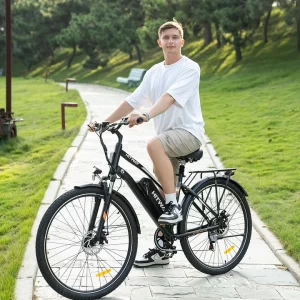
Looking for the best legal e-bike in the UK? Discover the UK’s EAPC rules, 250W motor limit, 15.5 mph assistance limit, throttle rules and our top legal e-bike picks.
Find out how long an e-bike battery lasts, how many miles you can expect from a single charge, what affects battery lifespan, and how to keep your battery performing at its best.
| Cookie | Duration | Description |
|---|---|---|
| cookielawinfo-checbox-analytics | 11 months | This cookie is set by GDPR Cookie Consent plugin. The cookie is used to store the user consent for the cookies in the category "Analytics". |
| cookielawinfo-checbox-functional | 11 months | The cookie is set by GDPR cookie consent to record the user consent for the cookies in the category "Functional". |
| cookielawinfo-checbox-others | 11 months | This cookie is set by GDPR Cookie Consent plugin. The cookie is used to store the user consent for the cookies in the category "Other. |
| cookielawinfo-checkbox-necessary | 11 months | This cookie is set by GDPR Cookie Consent plugin. The cookies is used to store the user consent for the cookies in the category "Necessary". |
| cookielawinfo-checkbox-performance | 11 months | This cookie is set by GDPR Cookie Consent plugin. The cookie is used to store the user consent for the cookies in the category "Performance". |
| viewed_cookie_policy | 11 months | The cookie is set by the GDPR Cookie Consent plugin and is used to store whether or not user has consented to the use of cookies. It does not store any personal data. |